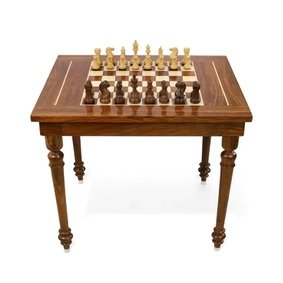
Some of the best evenings at home are the simplest. A table, a game and a few people willing to take turns can turn an ordinary night into something memorable. Chess has a special place in this kind of evening, because it works for a quiet two-player game and for a lively room with onlookers and advice.
A chess table makes that easier, because the setup is always ready. Here’s how to use one for a family night that suits everyone from beginners to enthusiasts.
Set the Scene
Start with comfort. Make sure there are enough chairs and that the light is soft and even. A lamp to one side works better than a harsh overhead light that casts shadows over the board.
Keep snacks and drinks on a side surface, not on the playing area. Spills and greasy fingers are hard on timber, and a clear table helps everyone concentrate.
Start With the Basics for Newcomers
If a younger family member is learning, start slowly. Set up the pieces together and name each one as you place it. A simple Staunton set has clear shapes, which makes this easier. The king has a cross, the queen has a crown, and the knight is a horse.
Play small games first. Try a game with only pawns, then add one piece at a time. Let your child take back a move now and then, and talk through ideas rather than only winning.
Pick Pieces That Suit Small Hands
Mid-sized pieces are usually easiest for children. Sterling Chess lists sets with kings from around 66mm to 98mm, so there’s a range to choose from. A weighted base helps because pieces stay upright when little hands bump the board.
Good colour contrast also helps beginners see each side clearly. Sterling Chess lists sheesham, rosewood, ebony and boxwood pieces, and a pale boxwood side against a darker wood is easy to read.
Mix in Other Classic Games
Not everyone wants a full chess game. Sterling Chess lists traditional games in its range, including backgammon, checkers, Chinese checkers, mahjong, solitaire, sudoku and tic tac toe. Having a couple of these nearby lets everyone join in.
Checkers uses the same style of board as chess, so it’s a natural bridge for younger players. Once they’re confident with checkers, chess feels like a gentle next step.
Try Team Chess
For a lively evening, try team games. Two people share each side and talk about their moves before playing them. This is great for mixed ages, because experienced players can guide beginners without taking over.
You can also set a rule that each team member must explain one reason for a move. It builds understanding and keeps the conversation going.
Use Short Games and Puzzles
Long games can lose younger players. Try five-minute rounds or a simple puzzle, like finding a checkmate in one move. Set up a position and let everyone have a go.
If you want to add a bit of excitement, Sterling Chess lists chess clocks from DGT in its timers and clocks category. Use one only when everyone is comfortable, so the clock adds fun rather than pressure.
Keep the Rules Friendly
A few shared habits keep the evening pleasant. Touch a piece only when you intend to move it. Lift pieces rather than dragging them. Congratulate the winner warmly, and help reset the board together.
Praise good ideas as well as wins. A clever plan that didn’t work is still worth celebrating.
Look After the Table and Pieces
Good habits protect the equipment. Wipe the surface with a soft, dry cloth, and avoid strong cleaners. Keep the table away from direct sun and heaters, which can fade or dry timber.
At the end of the night, return the pieces to their bag. Sterling Chess includes a velvet bag with its chess sets and pieces, and a storage case is another option from its accessories range.
Make It a Regular Event
The more often you play, the more natural it feels. Choose a regular night, such as a Friday after dinner or a Sunday afternoon. Leave a game in progress on the table, so it’s ready to continue.
Plan the Buying Side Carefully
If you’re setting up for family play, think about the whole setup. A comfortable table height, a set with weighted pieces and a spare board for newcomers are all useful. Sterling Chess lists free shipping on all orders and a 100 day return window, which gives you time to see how things work in your home.
Final Thoughts
Family chess isn’t about producing champions. It’s about time together, patience and a little friendly competition. With a welcoming chess table at the centre of the room, every evening has the potential to become a favourite memory.